






By Milan Laurent
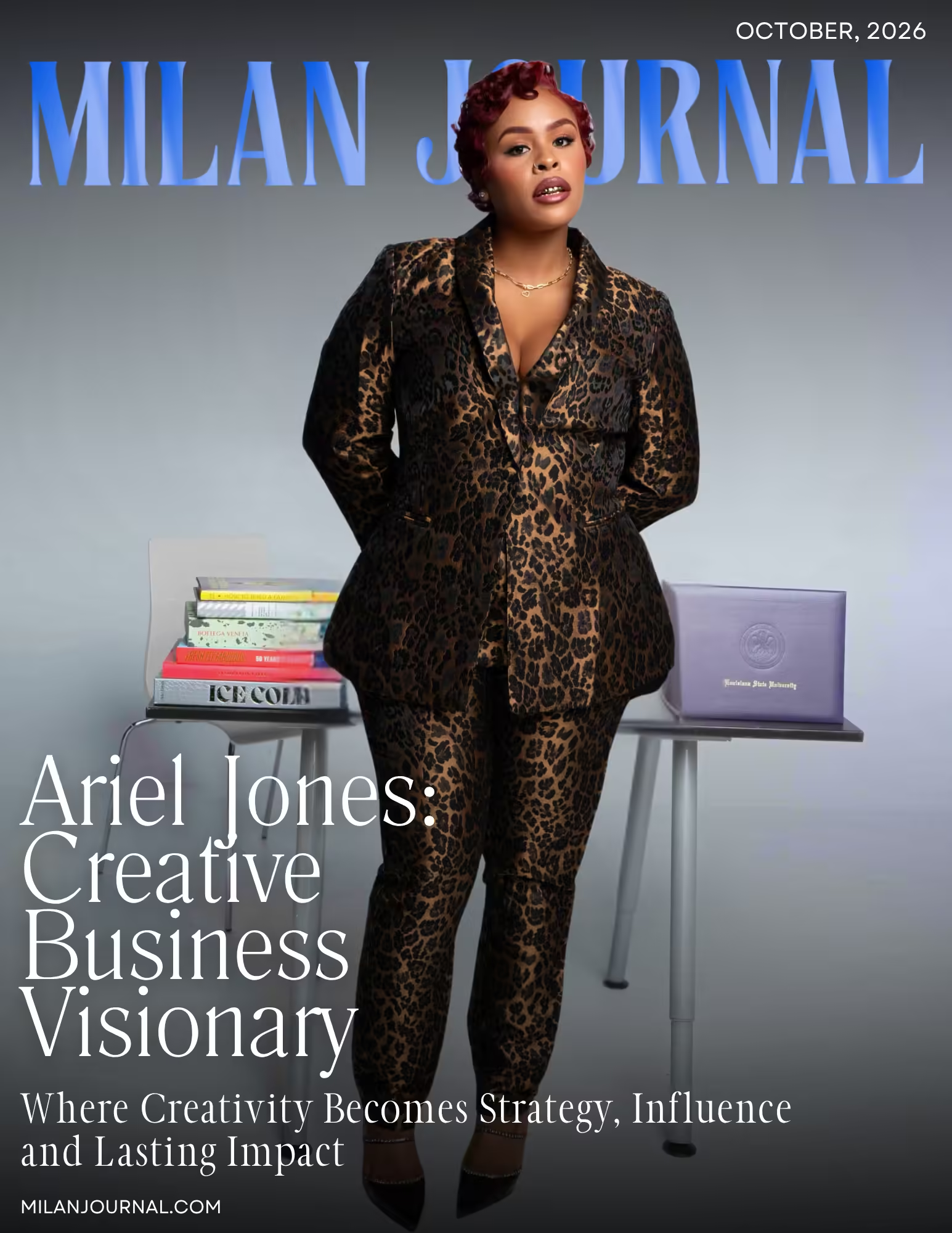
For Ariel Jones, creativity has never existed in a vacuum. It lives at the intersection of culture, commerce, relationships, storytelling and, perhaps most importantly, strategy.
As one of the creative forces behind Melz Grillz, Jones has helped shape a brand where luxury dentistry meets art, fashion, celebrity culture and innovation. Her work extends well beyond the design of statement-making grillz. She helps influence the brand’s visual identity, social presence, collaborations, influencer relationships and the larger world surrounding the product.
That distinction matters.
In an era where countless young creatives know how to make beautiful things but struggle to turn their talent into sustainable careers, Jones believes understanding the difference between creativity and business can determine whether an idea remains a passion project or becomes something far greater.
“The biggest lesson I had to learn was that creativity and business are two different skill sets—and you have to respect both,” she says.
A strong idea, she explains, does not automatically make a strong business. There are customers to understand, costs to calculate, markets to study and a value proposition to communicate.
With Melz Grillz, the creative vision was only the beginning.
“We knew we could create beautiful pieces, but we also had to build an experience around those pieces—quality, professionalism, customer service, trust and storytelling,” Jones says. “Especially when you’re selling luxury, people aren’t only buying the product. They’re buying into the world you’ve created around it.”


That philosophy has become central to the way Jones approaches business.
Instead of asking only whether something is visually impressive, she has learned to ask harder questions: Is it valuable? Can it grow? Is there a financial model behind it? Can one successful idea become the foundation for something larger?
It is a mindset that many emerging designers, stylists, artists and creative directors eventually have to develop.
Talent may open the door, but Jones believes branding determines whether people remember who walked through it.
“Your talent gets people’s attention, but your brand gives them something to remember.”
For Jones, branding is far more expansive than logos, colors or a curated social media feed. It encompasses how customers feel when they encounter the company, the collaborations a brand chooses, the opportunities it accepts—or rejects—and the consistency of its perspective.
At Melz Grillz, that meant refusing to treat the product as simply another accessory.
Instead, the brand has positioned its work at the convergence of luxury, culture, dentistry, art and innovation.
Every detail becomes part of that message: photography, packaging, social media, celebrity relationships, strategic partnerships and even the way representatives of the company enter a room.
Jones believes emerging creatives should work toward creating such a distinctive identity that the quality and positioning of their work are recognizable even before their name appears beside it.
Her understanding of that ecosystem was also shaped by Atlanta.
Before her work with Melz Grillz, Jones developed experience in music management and entertainment, giving her an early look at an industry where talent, timing, relationships and positioning constantly collide.
“Atlanta taught me that culture is a business, but relationships are the currency behind it,” she says.
The city’s ability to connect music, fashion, sports, art and entrepreneurship influenced how she sees opportunity. Rather than viewing industries as separate lanes, Jones sees the potential intersection between them.

When she considers a design, she may also consider the artist who could wear it, the story a publication could tell about it, the company that might collaborate with it and the cultural conversation the piece might enter.
It is a way of thinking that turns a product into a platform.
“Coming from music and entertainment helped me understand early that the most talented person in the room isn’t always the person who builds the biggest career,” Jones says. “You also have to understand relationships, positioning, timing, marketing, negotiation and how different industries connect.”
Those lessons become especially important when creatives begin determining what their work is worth.
Exposure can be seductive. So can the prestige of a high-profile collaboration. But Jones has learned not every opportunity deserves a yes.
“When you’re starting out, there’s pressure to say yes to everything because you want exposure, relationships and experience,” she says. “Some of those collaborations are valuable, but eventually you have to understand what your time, ideas, relationships and intellectual property are actually worth.”
Her advice is practical: understand contracts. Require deposits when appropriate. Know the usage rights attached to your work. Establish timelines. Define the scope of a project before beginning it. Learn what belongs to you.
These may not sound like the glamorous parts of a creative career, but they are often the pieces that make longevity possible.
Sometimes, Jones says, protecting your value also means walking away.
“A ‘no’ to the wrong opportunity can leave room for a much better ‘yes.’”
For the next generation of creatives hoping to build careers from their gifts, Jones emphasizes three areas: relationships, intellectual property and finances, and brand.
Relationships, she says, are not simply about collecting contacts. They are built through professionalism, follow-through, reputation and how people describe your work when you are no longer in the room.
Financial literacy and ownership matter just as much. Creatives should understand what they own, track expenses, learn how to price their services and separate personal and business finances.
Then there is the brand itself.
Every portfolio image, partnership, email, social post and room entered contributes to the story others begin telling about you.
Jones believes the greatest shift occurs when creatives stop seeing artistry and entrepreneurship as opposing identities.
They are not.
For anyone serious about making creativity a career, learning to become both may be the real work.
“If you want your creativity to become your career,” Jones says, “you have to become both.”


