

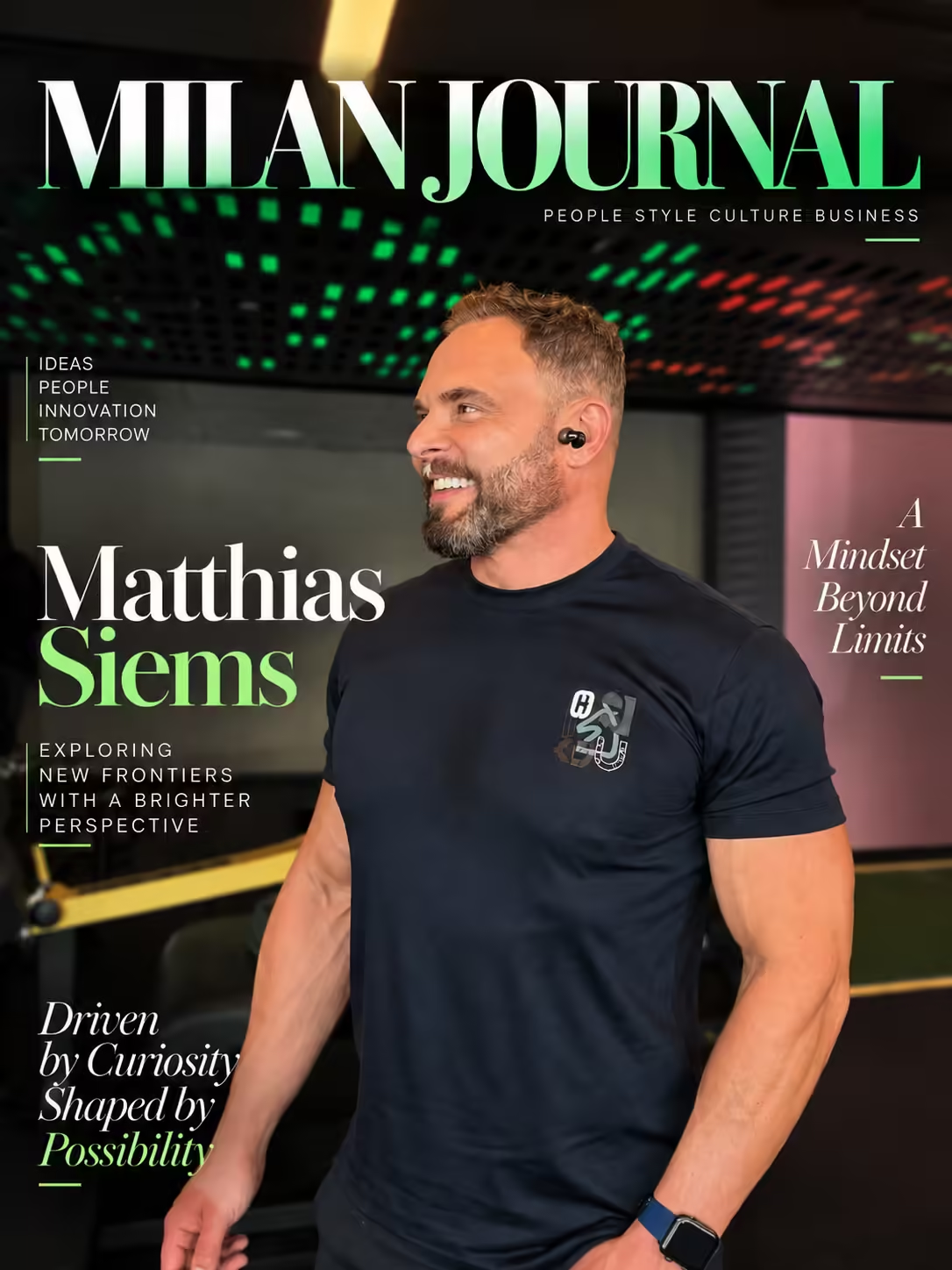
From international travel and refined personal style to the pursuit of new experiences, Matthias Siems represents a lifestyle conversation that goes beyond material success. At its centre is the question of how ambition, independence, relationships, and personal dreams can shape the way a successful individual chooses to live.
The image of success is often built around what the world can see. A confident presence, carefully chosen surroundings, memorable destinations, and the freedom to move between professional responsibilities and personal interests all contribute to the perception of a life well lived. Yet the most interesting lifestyle stories are not simply about appearances. They explore the values, choices, and ambitions that give those appearances meaning.
For Matthias Siems, the conversation around lifestyle offers an opportunity to look beyond the conventional symbols of achievement and consider a broader definition of personal success. It is a perspective shaped by ambition, curiosity, the attraction of new experiences, and the desire to keep exploring what life can offer.
In a culture that often equates success with possessions, there is something compelling about examining the relationship between achievement and freedom. The ability to choose where to go, what to pursue, how to spend time, and which experiences deserve attention can become just as significant as the professional accomplishments that helped create those choices.
A Lifestyle Shaped by Ambition
Ambition influences more than a person’s professional direction. It can also shape everyday routines, personal standards, travel preferences, and the way opportunities are approached.
For people who are naturally curious about the world, lifestyle becomes an extension of that mindset. New destinations provide different perspectives, unfamiliar environments encourage fresh thinking, and experiences outside established routines can create opportunities for reflection.
The relationship between ambition and lifestyle is particularly interesting because the two can influence one another. Professional goals may create the freedom to explore new interests, while personal experiences can inspire fresh ambitions and a broader understanding of what success means.
Siems’s stated philosophy reflects an interest in challenging conventional assumptions. His words, “The impossible is only impossible if you know it beforehand. If you do not know it is impossible, you look for a solution,” express a willingness to question limitations rather than accept them automatically.
Although the statement is connected to the way he approaches ideas, it also offers a useful perspective on personal life. A willingness to remain curious can lead people to explore new places, develop unfamiliar interests, and reconsider routines that no longer reflect their priorities.
A fulfilling lifestyle does not necessarily require constant change. Instead, it involves remaining open to opportunities while understanding which experiences genuinely add value.
The Appeal of Travel and New Experiences
Travel has long represented more than a change of scenery. For many people, it offers an opportunity to step away from familiar routines and experience the world through a different lens.
Different destinations reveal different ways of living. Architecture, culture, food, landscapes, and local traditions can influence how people understand their own preferences and priorities. Even a short journey can create memories that remain significant long after the experience itself has ended.
For someone who values independence and exploration, travel can also provide a sense of perspective. Time away from regular responsibilities creates space to reflect, reconnect with personal interests, and consider new possibilities.
The appeal of travel is not necessarily about how frequently someone moves between destinations or how exclusive those destinations may be. It is about the quality of the experience and the meaning attached to it.
A memorable journey may involve an extraordinary setting, but it can also come from a simple experience shared with the right people. What matters is the opportunity to create moments that feel distinct from the demands of everyday life.
In a lifestyle defined by ambition, travel can serve as both a reward and a source of inspiration. It allows professional achievement to translate into experiences, while exposing the individual to ideas and perspectives that can influence future decisions.
Personal Style and the Confidence of Simplicity
Personal style is often treated as a visual statement, but it can also communicate something about comfort, confidence, and individuality.
A well-chosen outfit does not necessarily need to attract attention through bold colours, elaborate designs, or obvious displays of luxury. Sometimes, the strongest impression comes from simplicity: clothing that fits well, colours that work together, and a look that feels natural rather than overly constructed.
Matthias Siems’s photographed appearance across different settings provides a visual starting point for discussing understated personal style. From relaxed shirts and casual clothing to more formal tailoring, the broader theme is the relationship between presentation and the environment.
A lifestyle wardrobe can move between different settings without losing a sense of consistency. Casual clothing may reflect comfort and practicality, while tailored pieces can offer a more formal expression of confidence. The most effective personal style is often the one that feels appropriate to the occasion without becoming the centre of attention.
There is also a wider point about the relationship between appearance and identity. Clothing can influence how someone presents themselves, but it does not define the values or experiences that shape a person.
True confidence is less dependent on following every trend than on understanding what works for the individual. In that sense, personal style becomes another form of self-expression rather than simply a reflection of what is fashionable at a particular moment.
Finding Balance Beyond Professional Goals
Ambition can provide direction, but a life built entirely around professional achievement risks leaving too little room for other experiences.
A balanced lifestyle requires an understanding of what deserves attention outside work. Personal interests, physical well-being, relationships, travel, and time spent away from professional responsibilities can all contribute to a more complete sense of fulfillment.
For highly ambitious individuals, balance does not necessarily mean reducing their goals. It can mean approaching those goals with a clearer understanding of the life they are intended to support.
The ability to disconnect from work, even temporarily, can create space for reflection. Time away from demanding schedules may help people recognise which commitments are essential and which have become habits simply because they are familiar.
This perspective also changes the meaning of productivity. A successful day is not always the one filled with the greatest number of tasks. Sometimes, it is the day that creates room for a meaningful conversation, a new experience, or a renewed sense of direction.
The challenge is not to divide life into perfectly equal categories. It is to create a rhythm that allows professional ambition and personal fulfillment to coexist.
For anyone examining Siems’s lifestyle, this balance offers a valuable theme. The most revealing details would be the routines, experiences, and personal priorities that help him maintain perspective while continuing to explore new opportunities.
Family and the Importance of Personal Connections
Lifestyle is often discussed through destinations, clothing, possessions, and experiences, but relationships can be among its most important dimensions.
Time with family and close friends creates a different kind of value from professional accomplishment. Shared experiences, conversations, traditions, and memories help establish a sense of continuity in a life that may otherwise be shaped by changing opportunities and responsibilities.
For people pursuing demanding goals, protecting time for personal relationships requires deliberate attention. Work can expand to fill available hours, and new opportunities can create additional commitments. Without clear priorities, the activities intended to improve life can gradually consume the time needed to enjoy it.
Family can also provide a different perspective on achievement. Professional recognition may be temporary, and financial circumstances can change, but the quality of personal relationships often remains central to a person’s sense of fulfillment.
A meaningful lifestyle therefore involves more than having the freedom to visit remarkable places. It also involves deciding who to share those experiences with and making time for the relationships that matter.
The personal side of Matthias Siems’s story deserves attention in this context. His own perspective on family, privacy, and the role of close relationships would provide the most authentic insight into how personal connections influence his lifestyle.
Curiosity, Ideas and the Pursuit of Possibility
A lifestyle can also be defined by the questions a person continues to ask.
Some people find inspiration in art, travel, sport, or culture. Others are drawn toward science, technology, psychology, or the possibility of developing ideas that challenge established thinking. Curiosity can provide a sense of momentum even when there is no immediate professional objective attached to it.
Siems has expressed interests spanning physics, psychology, space tourism, and decentralized energy concepts. These subjects are diverse, but they share a common invitation to explore how people understand the world and how different ideas might be developed.
Such interests can make life intellectually engaging beyond the boundaries of a single profession. They offer opportunities to learn, question assumptions, and consider possibilities that may not have obvious answers.
There is an important distinction between being interested in an idea and demonstrating that it works. Exploration is valuable in its own right, while technical claims require evidence and independent evaluation. Maintaining that distinction allows curiosity to remain open-minded without losing sight of practical realities.
The wider lifestyle lesson is that personal development does not need to stop when someone reaches a particular professional milestone. New interests can continue to provide direction, challenge, and fulfillment throughout life.
The Meaning of Luxury
Luxury is often represented by expensive objects or exclusive access, but its meaning varies considerably from one individual to another.
For some, it is the comfort of a beautiful environment. For others, it is the freedom to travel without rigid schedules, the ability to spend time with loved ones, or the opportunity to pursue a personal interest without constantly weighing its financial cost.
In this broader sense, luxury is connected to choice.
Financial independence can expand the range of available choices, but it does not automatically determine how a person will use them. The more important question is whether those choices reflect genuine priorities.
A life filled with expensive experiences can still feel unbalanced if there is little time to enjoy them. Conversely, a relatively simple routine can provide considerable fulfillment when it includes meaningful relationships, personal freedom, and activities that matter.
The most interesting lifestyle stories recognise this distinction. They explore how people define comfort, what experiences they value, and how they decide what is worth their time and attention.
For Matthias Siems, the idea of lifestyle becomes most compelling when viewed through that personal lens. Rather than focusing exclusively on the external symbols of success, it invites a conversation about what independence, comfort, exploration, and fulfillment mean to him.
Looking Toward the Next Chapter
One of the defining features of an ambitious life is that its priorities can evolve.
Experiences create new perspectives, interests change, and goals that once seemed distant can eventually become part of everyday reality. With each stage comes the opportunity to reconsider what matters most and where the next source of inspiration might be found.
The future may involve new places to explore, new ideas to investigate, new personal goals, or simply a more intentional approach to spending time. Not every next chapter needs to be defined by a major professional achievement. Sometimes, progress comes from refining existing priorities and creating greater space for the experiences that bring genuine satisfaction.
For Matthias Siems, the continuing pursuit of possibility provides a natural theme for this next chapter. His stated philosophy encourages a willingness to question limitations and look for solutions rather than automatically accepting that something cannot be done.
Applied to lifestyle, this outlook is less about constant reinvention than about remaining engaged with the future. It means allowing curiosity to create new opportunities while maintaining an understanding of the relationships and values that provide stability.
Ultimately, a lifestyle is not a finished product. It is a collection of choices that develops over time, influenced by ambition, experience, relationships, and personal priorities.
The most meaningful measure of success may therefore be the ability to create a life that reflects those priorities with greater clarity. Travel can provide perspective, personal style can express individuality, family can create connection, and curiosity can keep the future open to new possibilities.
Beyond appearances, the story of lifestyle is about how a person chooses to live. For Matthias Siems, that is the conversation worth exploring: not simply what success looks like from the outside, but what makes the life behind it personally meaningful.